
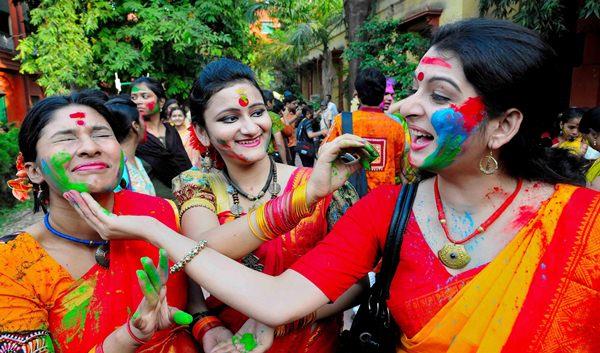
India is the land of festivals. Festivals are being celebrated by all the religions in their own way.Holi one among the unique festivals is once again here to enjoy, cherish and mentally relax. This particular most colorful festival of the Hindus, which falls on the Full moon day in the month of Phalgun according to Hindu calendar, which is the month of March as per the Gregorian calendar.
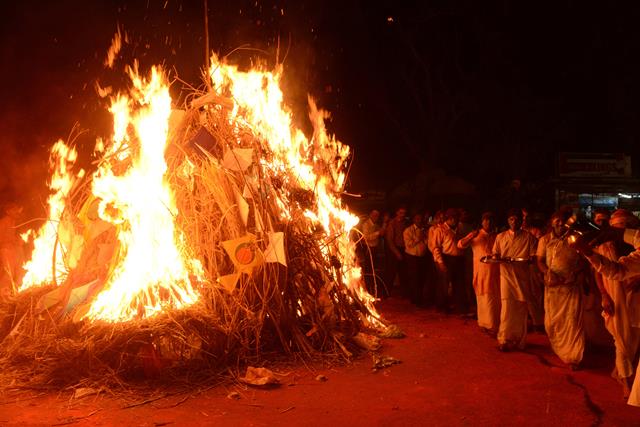
Holi is a festival of colours, eatables and fun. Holi festival is normally celebrated for two days. Fire is burnt on the eve of Holi which signifies the destruction of all evils and bad things.
Holi is a colorful and vibrant festival that is celebrated all over India. A number of mythological stories are associated with this festival of colors. Holi is celebrated during the month of Phalgun as per the Hindu calendar. The festival normally falls a day after the Phalgun Purnima or full moon day. Although people in almost all parts of India celebrate this festival, the celebrations vary according to regional influences, rituals and traditions. But though it is Hindu festival being enjoyed by all the people regardless of their religion, caste and language.
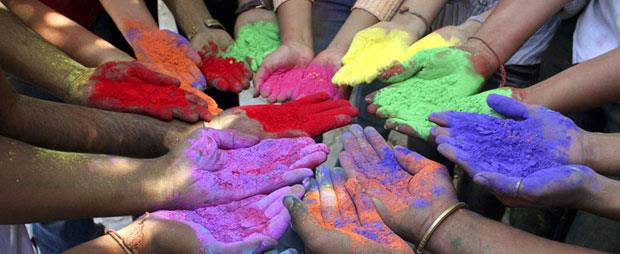
One of the most popular legends surrounding this festival is that Lord Krishna had applied color on cheeks of Radha during Holi since she was fairer than him. With this started the tradition of playing with colors on the occasion of Holi.
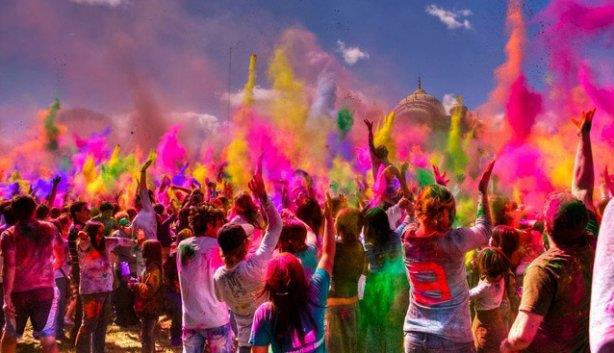
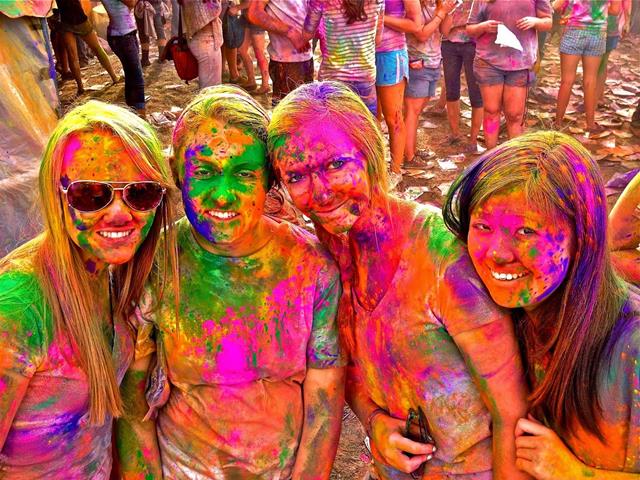
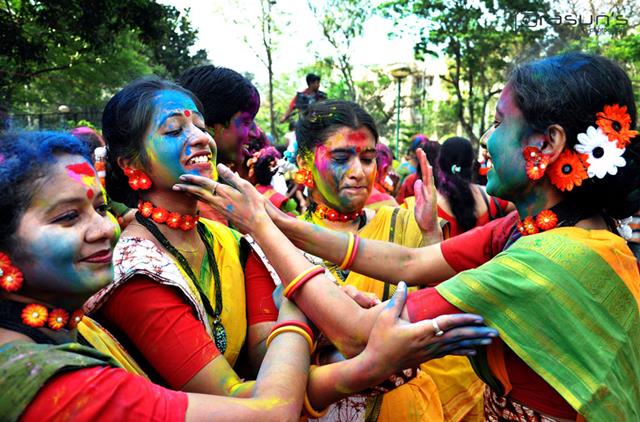
This Holi festival has many elements of primitive and prolific rites and reveries that have defied civilization and prudery. During the two days of this festival, particularly the whole country, towns, cities and villages – go gay with merry makers, streets, parks and public places are crowded with people, daubed in diverse colors, looking funny and ridiculous.
Children and youngsters vie with each other in being original and use fast and sticky colors. It is all a mirthful abandon for them.
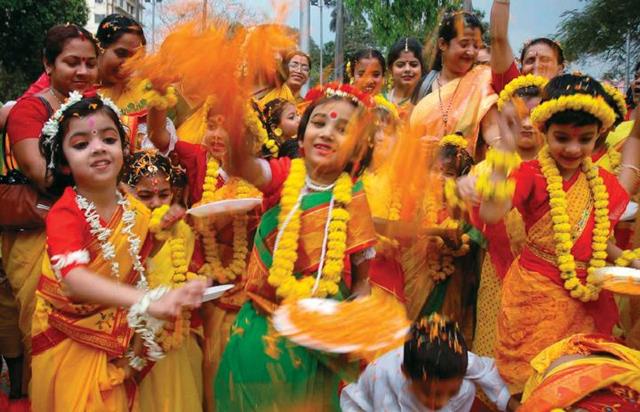
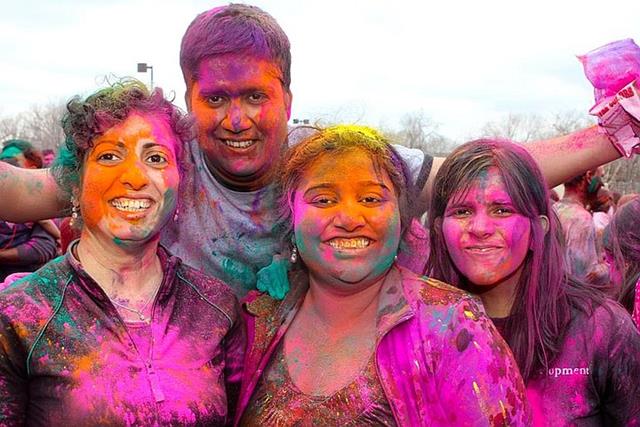
Holi heralds the arrival of spring – the season of hope and new beginnings and marks the rekindling of the spirit of life. Holi is one of the most ancient festivals of the Aryans. This festival of joy, mirth and buoyancy is celebrated when both Man and Nature cast off their winter gloom. Gulmohurs, corals, silk-cottons and mango trees start flowering, gardens and parks present a glorious spectacle of a riot of colors – crimson, red, pink, orange, golden yellow, lemon and a variety of glittering greens.
Men who remained indoors during the cold months of winter emerge out to see a new sparkling world of color and gaiety. The flowers breathe out their fragrance into space and brooks and streams leap in the valleys, Men rejoice with brilliant light of day and the eloquent silence of night. And then the joy bubbling in their hearts find expression in dance, drama and music.

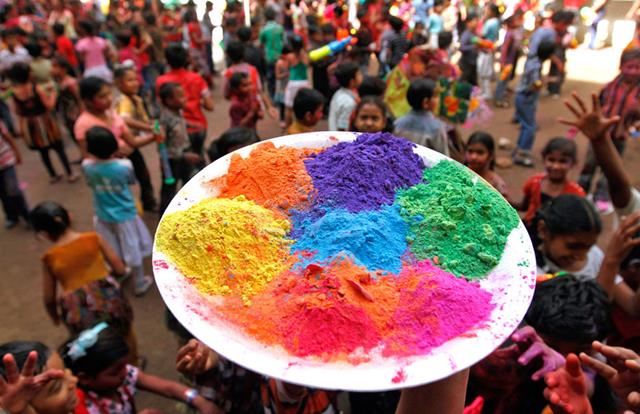
Holi also puts an end to the days of trials and tribulations for the poor who remained ill-clad and without adequate shelter during the chilling cold of the winter season. Holi was also celebrated as “Vasantotsava” in those days acclaiming it as a spring festival.
The mythological origins of this festival vary in different parts of the country. In South India specially in Tamilnadu and Kerala the legend that is popular is of Kamdev-the Love-god, his bow is of sugarcane having the string of a line of humming bees and his arrow-shafts are topped with passion that pierce the heart. In spring he moves through woodlands and hunts birds, beasts and men.
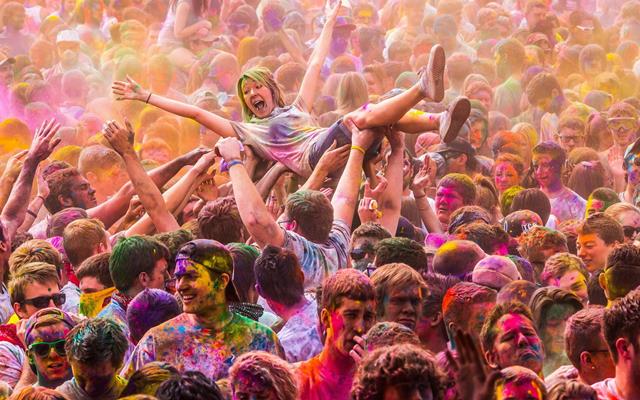
Once in his foolish pride, he aimed his arrow at the mighty Lord Shiv who was in deep meditation. Lord Shiv opened his third eye and burnt him to ashes. Grief-stricken Rati, Kamdev’s wife beseeched Lord Shiv to take pity on her and restore her husband to life. Shiv relented and granted her the boon that she could see her husband but he would remain “anang” that meant without the physical human form. Hence, the songs sung during Holi tell the pathetic tale of Rati and her lamentations. In Tamilnadu Holi is known by three different names – Kamavilas, Kaman Pandigai and Kama-dahanam.
Lord Krishna, the 8th incarnation of Lord Vishnu is also worshipped during the Holi festival, which is celebrated as a commemoration of a mythological incident. Pootana, the she-demon was sent by the cruel king Kamsa to kill the child Krishna. In guise of a beautiful woman, Putana went about in the village of Nandgaon suckling every child to death.
But the infant Krishna sucked her breasts till blood started flowing and she succumbed to her death. Hence, on the previous evening of the Holi day, bonfires are lighted to celebrate the victory of Krishna and the death of Putana.
The mighty king Hiranyakashyapu in his stupendous ego ordered his people to worship him as god. His son Prahlad defying his father’s orders continued his worship of Lord Vishnu. The king wanting to kill Prahlad and wipe out the very name of Lord Vishnu sent his sister Holika, who possessed the boom of never being burnt by fire, to destroy Prahlad.
She cajoled the young Prahlad to sit in her lap and she herself took her seat in a blazing fire with the full conviction that fire could never touch her. But Holika was devoured by the flames and Prahlad walked out of the fire unscathed and alive. Perhaps this festival got its name from this incident. Certainly it was the victory of good over Evil!
In North India and Uttar Pradesh, this victory is celebrated, effigies of Holika are burnt in the huge bonfires that are lit. This tradition is also followed in Gujarat and Orissa. To render gratefulness to Agni, god of Fire, gram and stalks from the harvest are also offered to Agni with all humility.
In Bengal this festival is known by the name of Dol Jatraor Dol Purnima. On this day the idol of Mahaprabhu Chaitanya, placed in a picturesquely decorated palanquin is taken round the main streets of the city. The head of the Bengali family observes fast and prays to Lord Krishna and Agnidev. After all the traditional rituals are over, he smears Krishna’s idol with gulal and offers “bhog” to both Krishna and Agnidev.
Krishna’s love-play with gopi’s is known all over the country. Hence, in places like Mathura and Vrindawan where Krishna cult flourished and is followed even to-day, this Holi festival is celebrated with songs, music, plays and dances and of course colored waters are thrown on each other.
In Nandagaon where the young Krishna played all his youthful pranks. Holi is observed for many days and also in Barsana which was the birthplace of Radha Krishna’s beloved. The men-folk of Nandagaon and the women-folk of Barsana come together and play the game of “Huranga” in which men abuse women and in retaliation women beat them with sticks that the men try to avoid with their shields.
This festival of Holi still retains to charm in Gurudev Rabindranath Tagore’s Shanti Niketan. On the Dol Purnima day in the early morning the students dress up in saffron-colored clothes and wear garlands of fragrant flowers. They sing and dance to the accompaniment of musical instruments before their teachers and the invited guests, sitting in a colorfully decorated dais. In the end dry gulal powder and the auspicious black abhir is smeared on the foreheads of everyone.
The Sikh community also celebrates Holi with feasting and merriment and calls it Hola Mohalla.
In Maharashtra Holi is commonly known by the name of “Shimga” and is also called RANGAPANCHAMI. The fisher folk celebrate it on a large-scale with hilarious singing, dancing and merry-making. To-day this festival retains its significance mostly in middle-class and the poorer sections of the state.
During the Maratha regime this festival was celebrated with great pomp and grandeur. It was on a Holi festival day that five year Jijabhai, daughter of Lakhooji Jadhav innocently splashed colored water and threw gulal on young shahaji, son of Malajirao Bhowale.
Taking it as an auspicious event, the two children’s engagement was announced that very day. Soon they were married. Shivaji, the son born to this couple fought valiantly and shook the very foundation of the powerful Mogul empire. Thus Shivaji established the Maratha Empire and changed the course of history.
As years rolled by this age-old festival of Holi acquired a new significance. Besides being a spring festival it also becomes the harvest festival. The winter crop of Rabi gets ripe and the corns of wheat become golden. So Holi means to the farmers joyful celebration of new harvest and bubbling with joy and excitement at the prospect of prosperity they offer their first crop to Agnidev – the god of Fire – who for centuries has been looked upon with love and esteem by the Aryans. Only after this offering of first harvest to Agnidev, the farmers use the crop for their personal consumption.
On the eve of Holi, huge bonfires are lit with logs of wood, basketful of cowdung cakes, ghee, honey and the new crop brought fresh from the fields. When the fire leaps up in high and strong flames all those present, walk around the bonfire seven times, pray and invoke the blessings of Agnidev.
Women prepare delicious sweets and put in the bonfire as “Naivedya” to Agnidev. When the fire lies down, water is splashed on the embers and the ash from the extinguished fire is applied on the forehead by everyone. Some of the ash is preserved in the house all through the year to apply to the foreheads of children as an effective remedy against any impending evil.
The ancient tradition of the Aryans of celebrating the festival of Holi in honor and in devotion to Agnidev – the god of Fire – continues even to-day in the modern world of science and technology. Indeed it is a festival which gives men a thrilling spell of happiness and despite from their problems of everyday life.
This festival of Holi – a festival of myriad colors, of gaiety, of friendships and re-unions all over the country. Thus Holi is certainly a vital part of our Indian life and culture in which religion still is a living force.
Wishing all the “Kannadigaworld” readers a very happy prosperous ‘Holi’
Shekar Moily