
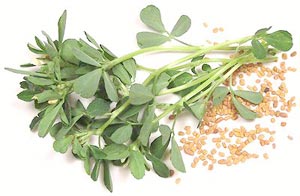
Fenugreek (Trigonella foenum graecum), native to southern Europe and Asia, is an erect annual herb with white flowers and hard, yellowish brown and angular seeds. Known as methi in Hindi, it is a popular ingredient in many North Indian dishes.
They are rich in vitamins such as thiamin, folic acid, riboflavin, niacin, vitamins A, B6, and C, and are a storehouse of minerals such as copper, potassium, calcium, iron, selenium, zinc, manganese, and magnesium. Fenugreek leaves are a rich source of vitamin K as well.
- Reduces Cholesterol –Fenugreek contains saponins that help reduce the body’s absorption of cholesterol from fatty foods.
- Helps with Weight Loss –Fenugreek complements diet and exercise for weight loss.• Protects from Cancer – Studies have shown that the fibers in fenugreek help prevent certain cancers.
• Maintains healthy Testosterone Levels – An Australian study reported significant positive effect of fenugreek on physiological aspects of male libido and also found that it may assist to maintain normal healthy testosterone levels.
• Aids Digestion – Fenugreek is said to be an effective heartburn or acid reflux remedy because the mucilage in fenugreek seeds assists in soothing gastrointestinal inflammation, and coating the stomach and intestinal lining.
- Increases Breast Milk– Fenugreek is used as a galactagogue by nursing mothers to increase inadequate breast milk supply.
- Fenugreek seeds are rich invitamin E and are added as preservatives in pickles.• Dried leaves of the fenugreek are used for flavoring meat, fish and vegetable dishes.
• Herbal tea made with fenugreek, lemon and honey (check below for recipe) is traditionally used as remedy for fevers.