
Travelling gives you the perfect opportunity to try local cuisine and taste local fruits. All the exotic places, close to the equator, have a plethora of weird fruits and a large variety of colours, shapes and flavours.
Some would charm you with their vivid colours and disappoint you later on with their dull taste, but others would truly enchant your senses, despite their unappealing looks.
In some parts of the world, these tropical fruits are as common as apples in Europe or North America.
1.Rambutan:
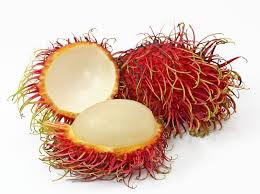
This tropical fruit is very common to Malaysia, Thailand, the Philippines, Vietnam, Borneo or Costa Rica. Its reddish skin is full of flexible spines. Once taken off, you find a translucent fruit with a taste very similar to grapes. The unripped rambutan is green and, depending on the species, the ripened fruit would be yellow or red. Rambutan is rich in B vitamins, especially in B6, and is a good source of Manganese – absolutely necessary for human metabolism.
- African horned cucumber:
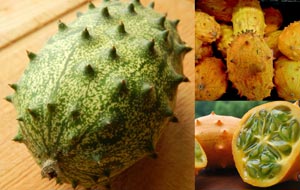
As the name is clearly stating, this yellow fruit is vely similar to a cucumber, in texture, and its skin has horn-like spines. The taste is usually described to be a combination of cucumber, banana and lemon. Depending on the location you are traveling to, you would find this fruit under different names like: horned melon, kiwano, jelly melon, hedged gourd, blowfish fruit or gaka. This tropical fruit is rich in vitamin C and Magnesium.
- Durian:
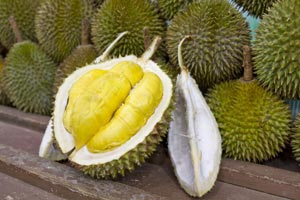
This is the kind of fruit or food that you either love or hate – there is no middle point. From the outside, the fruit looks quite interesting with its multitude of hard spines. Once you cut the husk open you will feel a very intense smell which some would describe to be disgusting, similar to a rotten onion. Moreover, in South Asia, this fruit is banished in public transportation and hotels because of the powerful smell. In taste, durian has a mixture of flavours, being sweet with a hint of fermented flavour. Despite its downsizes, durian is extremely rich in vitamins and other essential elements for our health.
- Mangosteen:
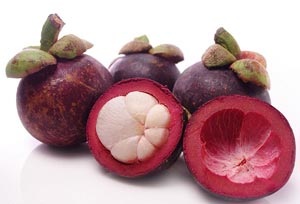
Native to South Asia, this fruit is not very popular outside the native territory.The hard purple skin is not edible and the fruit inside has a white flesh which looks very much like a head of garlic but tastes slightly sweet. The uneatable rind was found to contain certain chemical with anti-cancer effects. Besides this, mangosteens can improve joint flexibility, help the immune system, diarrhea and some ordinary infections.
- Starfruit:
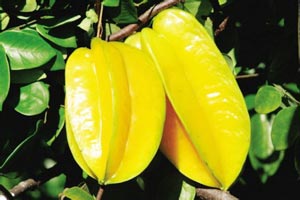
Starfruit, also known as carambola, can be found as local fruit in South Pacific, Southeast Asia, Latin America and the Caribbean. As the name states, this yellow fruit takes the shape of a star once is cut in slices. The taste is sweet and usually described as a mix of apple, pear grape and citrus. The starfruit is low in calories and very rich in potassium and vitamin C. If you have the opportunity, take full advantage of this tropical fruit as it is a powerful natural antioxidant.
- Snake fruit:
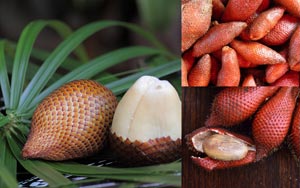
One would be wondering why the name “snake fruit”. The name is due to the resemblance of the outer layer of the fruit to the skin of a snake: reddish-brown scaly skin. Anyway, the fruit grows in palm trees and in some countries, is known under the name of salak. Once peeled, you will find something very similar to 3 garlic cloves but with a very sweet and slightly acidic taste and an apple like texture.
The salak is delicious and is very rich in iron and vitamin C but unfortunately, if you eat a lot of it, you can get constipation. The snake fruit can be found in Indonesia, Brunei and Malaysia.
Taste these rare fruits and enjoy.