
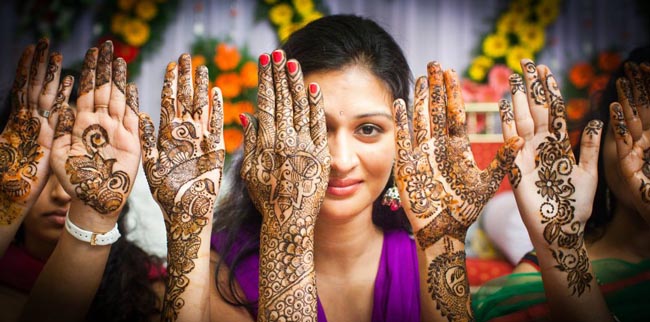
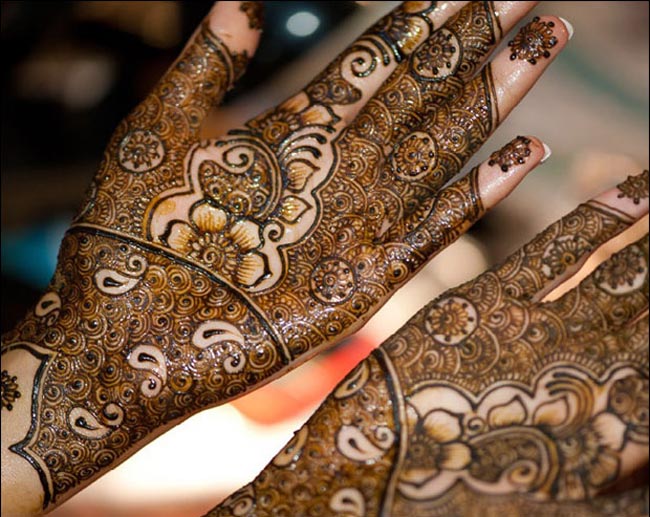
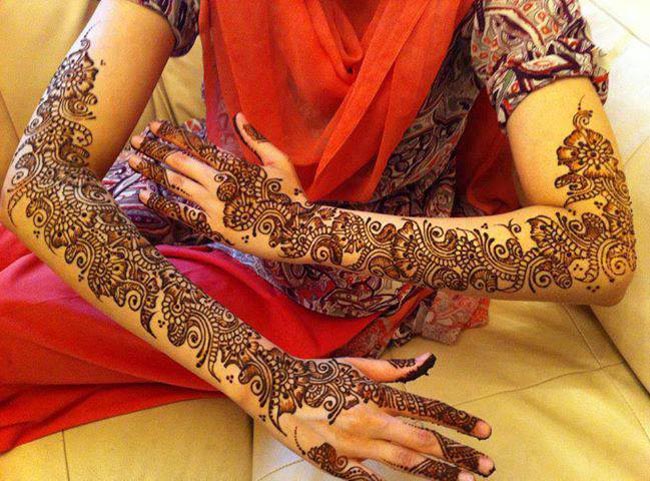
‘Mehndi’ ceremony is one of the most important pre-wedding ceremonies in India mostly among Hindu, Muslim, Sindhi, Gujarati and Sikh weddings and has been in vogue since ancient times and it is old custom. The mehndi ceremony refers to the applying of mehndi (henna) on the bride’s hands and feet. To ring in the festivities, female family members, relatives and friends of the bride also decorate their hands. Besides Mehndi is also applied on the groom’s hands.
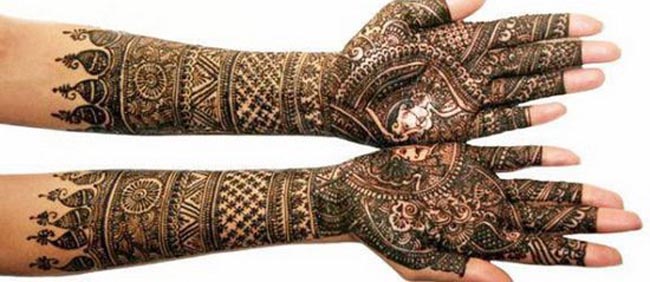
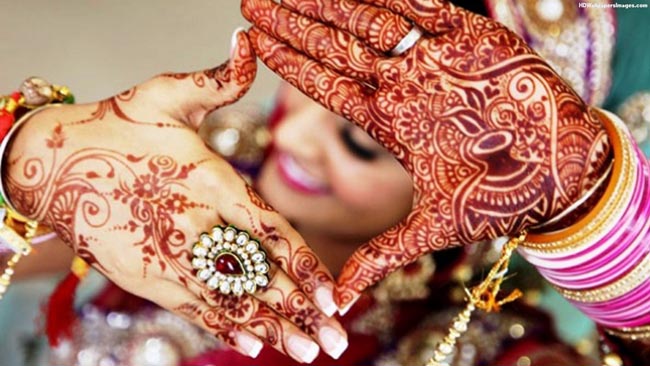
The art of applying henna in hands and feet is known as Mehndi and it is a very old custom and ancient art form of the Asian subcontinent. The propagators were the Mughals. The Mughals taught us all about the history of Mehndi and introduced it to India during 12th century AD. During that period the royal and rich use to decorate themselves with it.
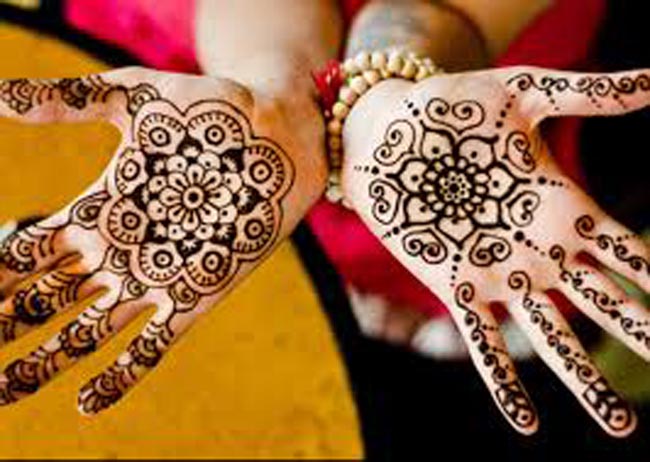
Indian weddings are incomplete without the mehndi ceremony. The ritual of mehndi ceremony is followed in every part of the country where the hands of the bride are adorned with the lovely red color of the mehndi. On these festive or wedding occasions mostly traditional Indian designs are made on the hands of the bride.
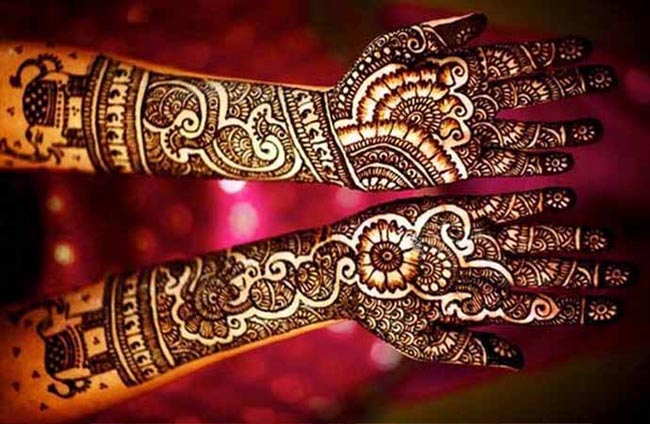
The origin can be from Egypt because it was one of the art forms in Egypt. Henna has the power of medicine was also used as a cosmetic and for its healing power for ages. The beautiful patterning prevalent in India today has emerged only in the 20th century. India, most of the women from that time in India is depicted with their hands and feet with red stain designs. The art of Mehndi has existed for centuries. No exact place of its origin is identified because of people in different cultures moving through the continents and taking their art forms with them and therefore sharing their art with everyone along the way.
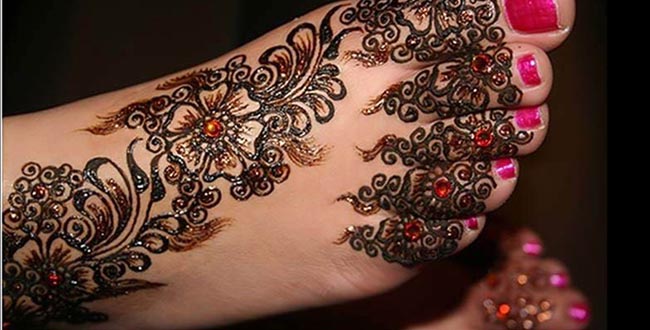
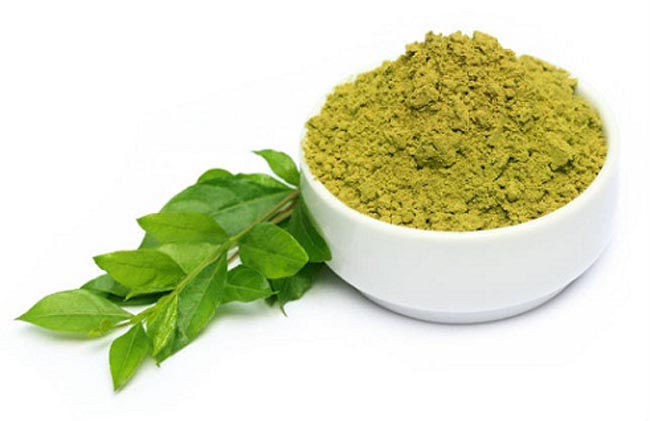
The bushes can be grown in dry and hot conditions. The leaves are processed as a skin conditioner and as a reliever for rashes. The henna used for mehndi comes from a bush which is grown in the Africa and India. Henna is used for hair dye and as a conditioner. Now a days readymade Mehndi powder and henna cones are available in the market.
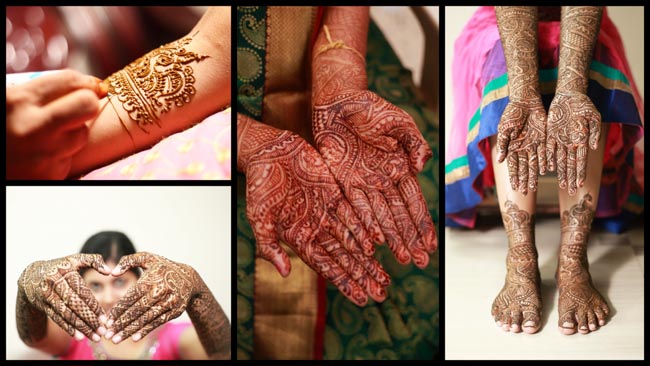
The most common belief related to mehndi is its colour. It is believed that darker the colour of the mehndi, the more the bride will be loved by her husband and in-laws. Another belief is that the longer the mehndi stays, the more she is adored by her mother-in-law. The designs generally include the name of the groom, which is to be found by the groom before the wedding night.

Significance
Amidst all the fun beliefs, the actual significance is often lost. Other than adding a dash of colour to the hands and feet, the henna leaves have immense medicinal and healing powers. Weddings, undeniably a period of stress and tension, create a lot of stress. Applying of mehndi on the hands and feet helps in keeping the nerve-endings cool, which in turn keeps the stress at bay.
Mehndi also acts as an antiseptic agent; thus, keeping the bride free from viral diseases, cuts and bruises around the wedding. Application of mehndi also improves blood circulation. Thus, the practice of applying mehndi was to keep the bride-to-be hale and hearty.
During weddings, the mehndi paste is further enhanced with the use of eucalyptus oil, clove oil and lemon juice. These oils not only infuse an aroma in the paste but also increase the healing powers. In addition to all these health benefits, the smell of the mehndi acts as a powerful aphrodisiac. Hence, its significance during weddings and thereafter!